Ssireum: Korea’s Ancient Martial Art of Strength and Spirit
Ssireum: Korea’s Ancient Power – The Brutal Art of Sand Wrestling
Ssireum: Korea’s ancient wrestling is a raw display of grit. Discover the satba, the legend of the ox, and the soul of Korean combat on us.stories.
KOREAN MARTIAL ARTS
Cubeddu G.Mario
1/18/202612 min read
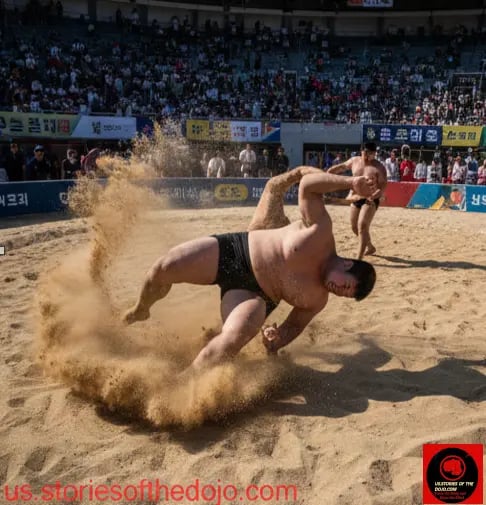
Ssireum Korea’s Ancient Martial Art of Strength and Spirit is basically just a brutal reminder that before we had the luxury of fancy Octagons or synthetic mats men were already out there settling scores in the dirt with nothing but a strip of cloth and a hell of a lot of pride. This isn't your polished Olympic wrestling style where everyone looks like they stepped out of a catalog; no way. It’s a raw high stakes collision of gravity and grit that’s been shattering egos since the 4th century. A sand pit brawl where one bad step or one tiny slip of the foot? It means you’re eating dust while your opponent walks away with the glory and man the crowd they just go absolutely wild. You can feel the vibration in the ground. It is visceral. Pure.
The Dirt The Ox and The Bloodline
Look if you want to really understand Ssireum you’ve gotta stop thinking about it as some boring folk dance for tourists or a quaint cultural museum piece. That’s absolute garbage. Pure crap. It’s a survival mechanism plain and simple. We’re talking about a timeline that makes the UFC look like a toddler playing in a sandbox. Seriously. You look at those Goguryeo tomb murals from the 4th century maybe even earlier they say and you see the exact same clinch. These dudes were grappling for their lives before most modern nations even had a flag or hell even a formalized language. And they weren't doing it for a shiny plastic trophy or some lame social media shoutout. No way José. Back then if you were the baddest guy in the village you walked home with a live bull. A literal ox. Think about that for a second. In a world of subsistence farming an ox was like owning a Ferrari. More valuable than gold maybe. It was the difference between your family eating like kings or starving in the cold winter. It was life.
That kind of brutal pressure creates a specific type of athlete one that doesn't care about points or rounds or technicalities. Nope. Not at all. It’s about not letting your knees touch the earth because the second they do you’ve lost the prize your family’s dinner and your damn pride. Every single ounce of it. Gone. I’ve spent time around these pits and the first thing that hits you isn't the tradition or the history it’s the sound. Oh man the sound. It’s the sound of three hundred pounds of human meat hitting the sand with a thud that vibrates in your own teeth. This isn't a sport for the faint of heart or the soft handed people trust me. When I talked to some of the old timers down in Busan they didn't talk about martial arts philosophy or some mystical Zen crap. They talked about the sand getting into your lungs and the way your fingers feel like they're going to snap off when you’re locked into the satba. That’s the reality of it. It’s a grind. It’s old school. It’s the kind of thing that builds a different breed of human someone who knows how to suffer in silence and still explode like a bomb the second a gap opens up. It's that raw old man strength multiplied by a thousand you know the kind that just doesn't quit. It stays with you forever.
The Satba Is Your Only Friend And Your Worst Enemy
Everyone always asks about the belt. The satba. It’s this thick stubborn strip of fabric wrapped around the waist and the right thigh. But here’s the thing you need to realize it’s not just a handle for you to pull on. No. It’s more like a sensory organ. In Ssireum you start the match already gripped up. You’re kneeling in the sand face to face shoulder to shoulder digging your hands into that fabric until your knuckles turn white. You aren't just holding on for dear life; you’re reading the other guy’s nervous system through his hip. You’re feeling the pulse in his leg the tension in his lower back the way his breath hitches right before he tries to make a move. Before the ref even blows that whistle the fight? It’s basically half over. If you can’t feel the twitch in his quad through that satba? You’re already a dead man walking. Simple as that. You have to be an animal.
Once you stand up you aren't allowed to let go of that grip. Ever. Imagine that tension for a second. You’re tethered to a monster who weighs three bills and wants to toss you over his hip and you’re forbidden from breaking the clinch to reset. It creates this claustrophobic high tension atmosphere that you just don't get in freestyle wrestling or even Judo for that matter. You can't just dance around and wait for a shot from the outside. No. You’re already in the fire. You have to use your core your hips and your sheer willpower to stay upright while he's pulling you into the abyss. It’s a game of millimeters. One slip one inch of slack in your grip and you’re done for. The satba is your lifeline but if you don't know how to use it it’s a noose that’s going to drag you down into the dirt. It’s a literal connection a bridge of sweat and cotton that transmits every ounce of intent between two fighters. Every. Single. Ounce. You can feel their heartbeat through the cloth. It is insane. It is real.
Physics Lessons from a 300 Pound Giant
I hear people say all the time that Ssireum is just for the big boys. You know the fat guys. Sure the Baekdu class guys are absolute mountains dudes who look like they eat stones for breakfast but if you think it’s just a pushing match you haven't been paying attention at all. Not even a little bit. The technical depth here? Insane. We’re talking about hand techniques leg trips and hip throws that rely on the most basic brutal laws of physics. It’s about the pop. That explosive moment where you redirect three hundred pounds of charging mass into a back flip throw. It is beautiful in a violent sort of way.
Take the dwijibgi for instance. Man seeing a high level wrestler hit a dwijibgi is like watching a car crash happen in slow motion but with the grace of a ballet dancer. Unreal. You’re using your opponent's momentum against him. He’s driving into you thinking he’s got the angle and suddenly you arch your back bridge your hips and whip him over your own head using the satba as a lever. It’s violent and it’s beautiful all at once. Or look at the balgarak the leg holds. One subtle hook of the heel one tiny shift in the center of gravity and a guy who looks like he could lift a house is staring at the sky wondering what the hell just happened. This is why MMA scouts are starting to drool over these guys lately. The balance is supernatural. You try to take down a Ssireum vet and it feels like trying to tackle a fire hydrant that’s bolted into the bedrock. It’s just not happening. Their centers of gravity are like lead weights. Unmoveable. They just stand there and you break yourself against them.
The Grind in the Pit Where Soul Meets Sand
If you want to see where the magic really happens you have to go to the ssireum jang the training pit. It’s not some fancy air conditioned facility with neon lights and overpriced protein shakes. No. It’s usually just a hot humid room with a circle of sand that’s been packed down by decades of failure and success. The training is repetitive exhausting and honestly a bit boring to the untrained eye. It’s hundreds of lifts a day. You pick up your partner you rotate you set him down. Over and over until your lower back screams and your grip feels like it’s permanently fused to the cloth.
But that’s the point isn't it? It builds a specific kind of Hon or spirit. You see these young kids maybe ten or twelve years old out there in the heat. They aren't complaining about the sand in their eyes or the burns on their knees. No. They’re learning how to be unmovable. That’s the Korean ideal. Not just physical strength but a mental stubbornness a refusal to be displaced no matter what. When I watched a session in a small gym outside of Seoul I didn't see any egos. The older guys were coaching the younger ones fixing their posture showing them how to breathe through the clinch. There’s a quiet intensity there that you just don't find in modern fitness culture. It’s ancestral. It’s deep. It’s about more than just muscles it’s about becoming part of a lineage of people who didn't know how to quit. Ever. It's about that grit that stays under your fingernails long after you've showered and gone home. A part of you. You carry that sand home in your soul. It becomes your identity.
Respect After the Storm The Jeong Factor
One thing that always gets me about Ssireum is the Jeong the communal bond. In the West we love the trash talk. We love the Conor McGregor style build up where everyone hates each other and throws dollies at buses. Ssireum doesn't have time for that nonsense. You’ll see two guys go at it like they’re trying to tear each other’s limbs off for thirty seconds and then the second the whistle blows the winner is reaching down to pull the other guy up. He’s brushing the sand off his opponent’s back with genuine care. It’s not for the cameras. It’s real. That’s a real gesture. It’s about brotherhood in the struggle.
This respect is baked into the rules. You bow to the sand you bow to the ref and you bow to the guy you’re about to fight. It’s a recognition that you’re both part of something bigger than yourselves. You’re both carrying the weight of sixteen centuries on your shoulders. It’s a shared struggle. When you lose you lose with dignity. When you win you win with humility. It sounds like a cliché until you see it happen in person and then you realize why this sport has survived while so many others have faded away into the history books. It’s a lesson in humanity that we’ve mostly forgotten in our rush to be the loudest person in the room. In the pit your actions speak way louder than your mouth ever could. Period. It's the ultimate truth teller. You can't lie in the sand.
The Global Stage and the Future
Is Ssireum at risk? Maybe. In a world of esports and K Pop a sand pit can feel a bit old world. Outdated even. But the Korea Ssireum Association isn't taking it lying down. They’re rebranding making the matches faster and highlighting the fact that these wrestlers are some of the most impressive athletes on the planet. And let’s be real the aesthetic doesn't hurt. These guys are ripped they’re powerful and they look like ancient statues come to life. They are the ultimate billboards for functional strength. Not pretty boy strength. Real functional power that moves mountains. It's honest work.
But beyond the looks it’s the utility that’s going to keep Ssireum alive. We’re seeing more and more of these techniques show up in global MMA. The clinch work the hip tosses the sheer un takedown ability of these guys is a blueprint for the next generation of fighters. Seriously it is. Whether it’s in a professional arena in Seoul or a dusty village square during Chuseok Ssireum is going to stay relevant because it’s honest. You can’t fake it in the sand. You either have the base or you don't. You either have the heart or you're going home empty handed. It’s a return to the roots of what it means to be a warrior. No gimmicks no shortcuts. Just two people a circle of sand and the grit to stay standing.
If you ever find yourself in Korea find a match. Sit in the sand. Listen to the drums. Watch two men try to move a mountain. You’ll realize that you aren't just watching a wrestling match. No. You’re watching seductively sixteen centuries of history pride and Hon distilled into a thirty second explosion of power. Ssireum is Korea and Korea is Ssireum. And that’s a story that’s still being written one grain of sand at a time. It's about being anchored when the world is trying to flip you. That's a lesson we could all use right about now. It’s the kind of strength that doesn’t need to shout to be felt it just sits there heavy and undeniable like the earth itself. It’s the spirit of a people who have survived everything the world threw at them still standing still gripping the belt. Every single drop of sweat in that pit is a testament to the fact that some traditions don't die they just get tougher with age. They get meaner. They get more real. It's about the sand. It's always about the sand. Every grain tells a story.
IMPORTANT SAFETY & LEGAL NOTICE
Listen up. The techniques, movements, and combat concepts shown in the videos on this site are for demonstration, historical, and cultural purposes only. We are talking about a lethal heritage here, not a backyard game.
The blog us.storiesofthedojo.com and its creators explicitly disclaim any and all liability for any injury, loss, or damage resulting from the misuse or attempted application of the techniques described or shown. If you decide to go out and try this stuff on your own, you are doing so entirely at your own risk. We are not responsible for your choices or your safety.
Martial arts and traditional fencing are serious business. These techniques should always be practiced under the strict supervision of a certified master in a controlled, safe environment. Real skill isn't learned from a screen—it’s forged through discipline and professional guidance. Don't be a statistic. Respect the art, respect the danger, and find a real teacher.
Ssireum: Everything You Actually Need to Know (FAQ)
What the hell is Ssireum anyway?
Look, don’t call it just "Korean wrestling" like it’s some generic gym class. It’s way deeper. It’s a thousand-year-old brawl in a sand pit where you’re basically tethered to a giant by a leg belt called a satba. The goal? Simple but brutal: make any part of the other guy’s body—from his knee to his head—touch the sand. If you touch the dirt, you’re done. No rounds, no complicated point systems, just gravity and a lot of sweat.
Is it just for huge guys?
I get why people think that. You see these mountains of men in the Baekdu class and you think, "Okay, it’s a fridge-moving contest." But no. While size is a massive help, the lighter classes like Taebaek are all about speed and insane technical leverage. I’ve seen smaller guys whip massive dudes over their shoulders using nothing but a tiny shift in hip physics. It’s about balance. If you don't have a base, you're toast, no matter how much you bench press.
What’s the deal with the belt thing?
The satba. Man, that’s the heart of the whole thing. It’s not just a handle. It’s your only connection to the other guy. You wrap it around your waist and right thigh. Before the match even starts, you’re already locked in, kneeling in the sand, gripping that cloth like your life depends on it. You aren't allowed to let go. If you lose your grip, you lose the match. It’s that simple. It’s basically a high-tension cable that tells you exactly where the other guy is moving before he even knows it himself.
How is it different from Sumo?
People always compare them because of the sand and the big guys, but they’re totally different animals. In Sumo, you can win by just pushing the guy out of the ring. In Ssireum, there is no "out of bounds" win. You have to put him down. Also, in Sumo, you start apart and charge. In Ssireum, you start already gripped up in a clinch. It’s much more about lifting and tripping than just raw shoving. It’s a different kind of violence.
Does it actually work in a real fight or MMA?
Ask any scout. The balance these guys have is supernatural. You try to take down a Ssireum vet and it’s like trying to tackle a tree. Their clinch work and "un-takedown-ability" are world-class. We’re seeing more of their leg trips and hip tosses show up in global MMA because they’re efficient. They don’t waste energy. It’s all about using the other guy’s weight against him. So yeah, it’s legit.
Can I go watch a match?
If you’re in Korea, absolutely. Look for festivals like Dano or Chuseok. That’s when the big tournaments happen. It’s not just the wrestling; it’s the drums, the food, and the crowd screaming their heads off. It’s a whole vibe. Just don't expect a quiet, polite theater experience. It’s loud, it’s dusty, and it’s beautiful. You’ll leave with sand in your shoes and a lot of respect for these athletes.
Join Our Journey
Explore the secrets of martial arts with us!
Legal Info
storiesofthedojo@yahoo.com